
A missed customer invoice, an uncategorized card charge, and a sales-tax deadline can turn a busy week into a costly problem. When weighing accounting software versus bookkeeper support, small-business owners are really deciding how much time, expertise, and oversight their finances need. The right answer is not always one or the other.
Accounting software gives you a place to record transactions and monitor activity. A bookkeeper helps make sure those records are complete, accurate, and useful. For many Fresno and Central Valley businesses, the strongest approach combines a capable software system with a knowledgeable person who understands the business behind the numbers.
What Accounting Software Does Well
Modern accounting software can make routine financial tasks faster. It can connect bank and credit card accounts, create invoices, track customer payments, organize expenses, and produce reports such as a profit and loss statement or balance sheet. For a new owner-operator with straightforward activity, these features can bring welcome structure to financial records.
Software is particularly useful when you need immediate access to basic information. A contractor may want to see whether a customer has paid an invoice before scheduling another job. A retailer may want a quick view of daily sales. A service business may need to send recurring invoices without rebuilding them every month. In these situations, software is an efficient tool.
It can also reduce manual data entry. Bank feeds import transactions, receipt-capture tools retain documentation, and recurring rules can categorize regular charges. Those conveniences save time, but they do not guarantee accuracy. The system can import a transaction correctly while assigning it to the wrong account. It can create a polished report from incomplete information. Good-looking numbers are not necessarily reliable numbers.
Software Still Needs Someone in Charge
Accounting programs are designed to process information according to the instructions they receive. They do not know that a transfer between two business accounts is not income. They cannot reliably decide whether a restaurant meal was a valid business expense, whether a vehicle purchase should be depreciated, or whether an owner withdrawal was recorded properly.
A common issue is relying too heavily on automatic categorization. A charge may be labeled as office supplies because a similar transaction was coded that way previously, even though it was equipment, a personal purchase, or a cost that belongs in a different category. Small errors repeated month after month can distort profitability and create extra work at tax time.
Software also does not replace judgment. If cash is tight, a report alone cannot tell you which bills should be paid first, whether pricing is covering costs, or how a planned purchase may affect your tax position. Those questions require context and informed guidance.
When a Bookkeeper Adds Greater Value
A bookkeeper manages the day-to-day discipline that turns transactions into dependable records. This includes reconciling accounts, reviewing income and expenses, recording bills and payments correctly, tracking receivables, and preparing timely financial statements. The goal is more than keeping the books tidy. It is giving the owner a clear picture of what is happening in the business.
That clarity matters when decisions cannot wait until tax season. If you are considering hiring an employee, adding a delivery route, opening a second location, or purchasing equipment, current records help you evaluate the decision with more confidence. If the books are several months behind, you are making decisions based on memory rather than facts.
A professional bookkeeper can also establish routines that support compliance. Depending on the business, this may involve separating personal and business spending, organizing source documents, monitoring payroll-related records, keeping sales-tax activity in order, and flagging transactions that need a tax professional’s review. Accurate bookkeeping does not eliminate every tax obligation, but it creates the foundation for accurate filings and better planning.
For owners who are already working with customers, employees, vendors, and family responsibilities, outsourcing bookkeeping can also return something valuable: time. The question is not simply whether you can enter transactions yourself. It is whether that work is the best use of your time and whether you can keep up with it consistently.
A Bookkeeper Is Not the Same as a Tax Advisor
Bookkeeping and tax work support each other, but they are different services. A bookkeeper maintains financial records. A tax professional prepares returns, interprets tax rules, develops planning strategies, and addresses tax issues when they arise. In a well-organized financial relationship, bookkeeping is completed throughout the year so tax preparation is based on clean, complete records.
This distinction is especially helpful for businesses with changing circumstances. Adding a partner, buying a vehicle, bringing on workers, operating in more than one state, or receiving notices from a taxing agency can all require guidance beyond day-to-day transaction entry. Ask your provider what is included and when tax-planning conversations should take place.
Accounting Software Versus Bookkeeper: A Practical Decision
The choice often comes down to complexity, available time, and the cost of mistakes. Accounting software may be enough if your business has a low number of transactions, simple income sources, no employees, and an owner who is comfortable reviewing reports and reconciling accounts monthly. Even then, periodic professional review can help catch problems before they carry into a tax return.
A bookkeeper becomes more valuable as activity increases. You may benefit from ongoing support if you have multiple bank or credit card accounts, inventory, frequent customer invoices, vendors to pay, payroll, sales-tax requirements, several workers, or a business that is growing quickly. The same is true if your books are consistently behind or you avoid looking at them because they feel overwhelming.
Consider a local delivery business. Software can record fuel purchases, customer payments, and vehicle expenses. But a bookkeeper can reconcile the accounts, separate fuel from repairs, identify unpaid invoices, and provide financial reports that show whether delivery routes are actually profitable. That information can shape pricing and expansion decisions.
Now consider a sole proprietor with a small number of monthly transactions and one primary service offering. That owner may use software successfully, provided personal and business funds stay separate and the accounts are reconciled every month. A quarterly check-in with an accounting professional can provide reassurance and keep tax estimates from becoming a surprise.
Why Many Businesses Use Both
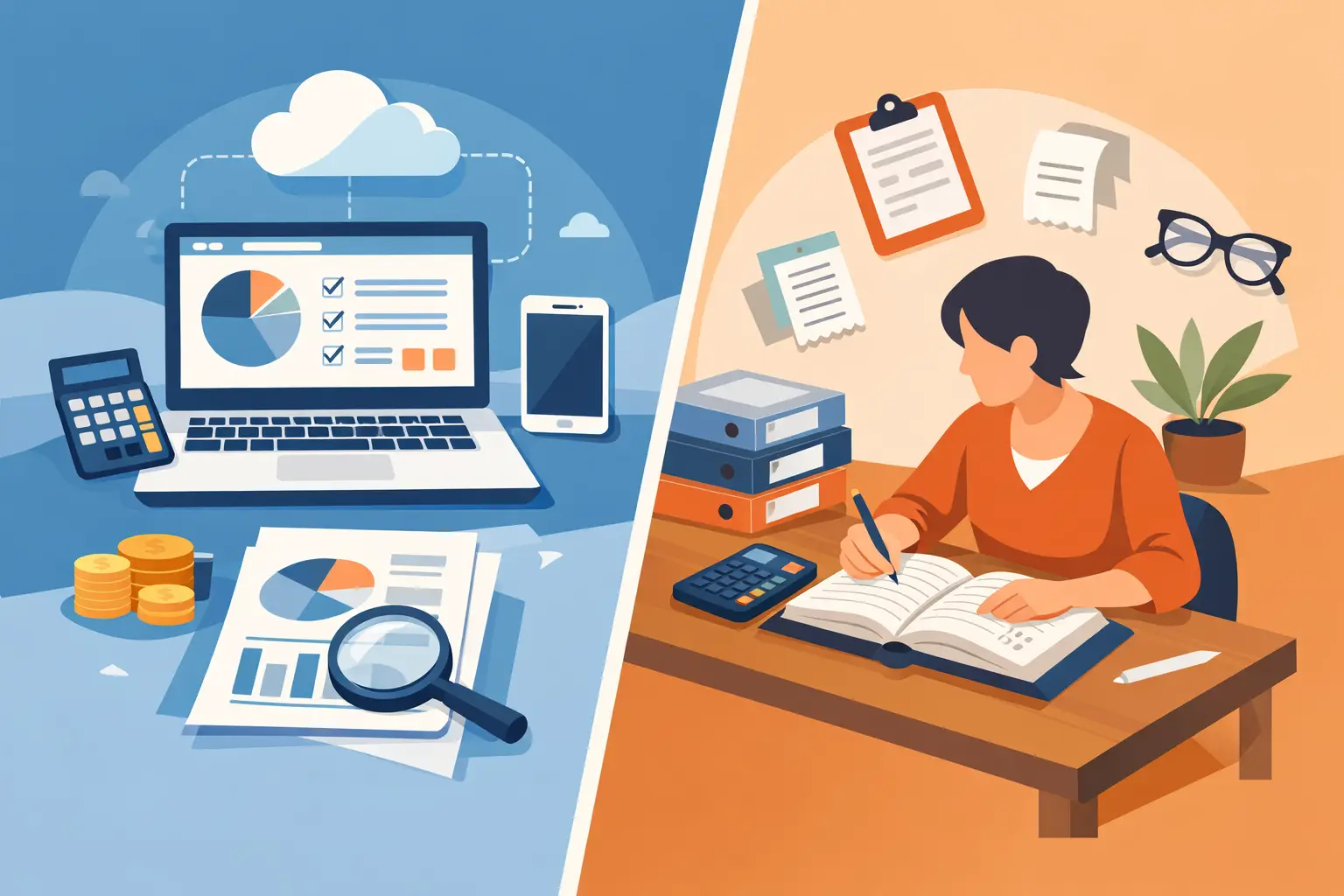
This does not have to be an either-or decision. Software is the tool; a bookkeeper is the person applying process, review, and judgment. Together, they can provide faster access to financial information without placing the full responsibility on the owner.
A practical arrangement might have the owner use an app to submit receipts and review invoices while the bookkeeper manages reconciliations, transaction review, and monthly reports. The owner remains informed without having to become the full-time financial department. When tax planning is needed, the accounting records are already organized and ready for discussion.
This approach also creates accountability. Regular financial reporting gives you opportunities to ask useful questions: Are expenses increasing faster than revenue? Which customers are slow to pay? Is there enough cash available for upcoming payroll, taxes, or inventory? Are owner draws aligned with the business’s actual performance? These are management questions, not just bookkeeping questions.
Questions to Ask Before You Choose
Before selecting software, bookkeeping support, or both, look beyond the monthly price. Ask whether the system will work with the way you bill customers and pay vendors. Consider who will reconcile accounts, correct errors, retain supporting documents, and review reports. If you need payroll, sales-tax tracking, or job-costing, confirm that the process can handle those needs before a deadline forces a rushed solution.
It also helps to be honest about your preferred role. Some owners enjoy managing the details and have the time to do it. Others are better served by reviewing clear reports and focusing their energy on clients, operations, and growth. Neither approach is wrong. The risk comes from choosing a do-it-yourself system and then allowing the records to fall behind.
At SBA Accounting & Tax Solutions, we believe financial information should help business owners feel prepared, not burdened. Whether you need help setting up a workable process, catching up on books, or maintaining accurate records throughout the year, the best starting point is a system you can follow consistently. Clean books today can make tomorrow’s tax decisions, cash-flow conversations, and growth opportunities far easier to manage.