
A landscaping company finishes a large commercial job in December but does not receive payment until February. Did the business earn that revenue in December, when the work was completed, or in February, when the check arrived? The answer depends on cash versus accrual accounting – a choice that affects your financial statements, tax timing, cash-flow planning, and view of business performance.
For many Central Valley business owners, this is not just an accounting question. It influences when income appears taxable, whether current reports show a realistic profit, and how confidently you can make decisions about hiring, equipment, inventory, or expansion. The right method depends on how your business operates, not simply which one sounds easier.
What Is Cash Accounting?
Cash accounting records income when money is received and expenses when money is paid. If you send an invoice in December and your customer pays in January, the income is generally recorded in January. If you receive a vendor bill in December but pay it in January, the expense is generally recorded in January as well.
This method is straightforward because it follows activity in your bank account. Many freelancers, consultants, contractors, and newer service businesses appreciate that simplicity. Your bookkeeping can more closely answer a familiar question: How much cash came in, and how much went out?
Cash accounting can also provide some flexibility around year-end tax planning. For example, a qualifying business may be able to delay billing or collect certain payments after year-end, or pay legitimate upcoming expenses before year-end, depending on its facts and tax strategy. Those decisions should be made carefully, with a clear business purpose and professional guidance, rather than as a last-minute attempt to force down taxable income.
The limitation is that cash accounting may not show the full economic picture. A business can appear highly profitable after collecting a large deposit, even if it still has significant labor, material, or delivery costs ahead. It can also look weak in a month when customers have not paid yet, despite a full schedule and substantial completed work.
What Is Accrual Accounting?
Accrual accounting records income when it is earned and expenses when they are incurred, regardless of when money changes hands. In the landscaping example, revenue is recorded in December if the work was completed then. If the company owes its nursery supplier for December materials, it records that expense in December even if it pays the bill in January.
This approach uses accounts receivable to track amounts customers owe you and accounts payable to track bills your business owes. It may also involve inventory, prepaid expenses, deposits, deferred revenue, and other balances that require ongoing attention.
Because it matches revenue with the costs associated with earning it, accrual accounting often provides a clearer view of profitability over time. A retail business can see the cost of the inventory it sold during a period. A delivery company can compare that month’s completed deliveries with driver costs, fuel, repairs, and other related expenses. A growing contractor can better understand whether a project is profitable before the final payment arrives.
That added clarity comes with more bookkeeping discipline. Invoices need to be recorded when issued, vendor bills need to be entered when received, and reconciliations need to be completed consistently. The records are more informative, but they also require a process your team can maintain.
Cash Versus Accrual Accounting: The Practical Difference
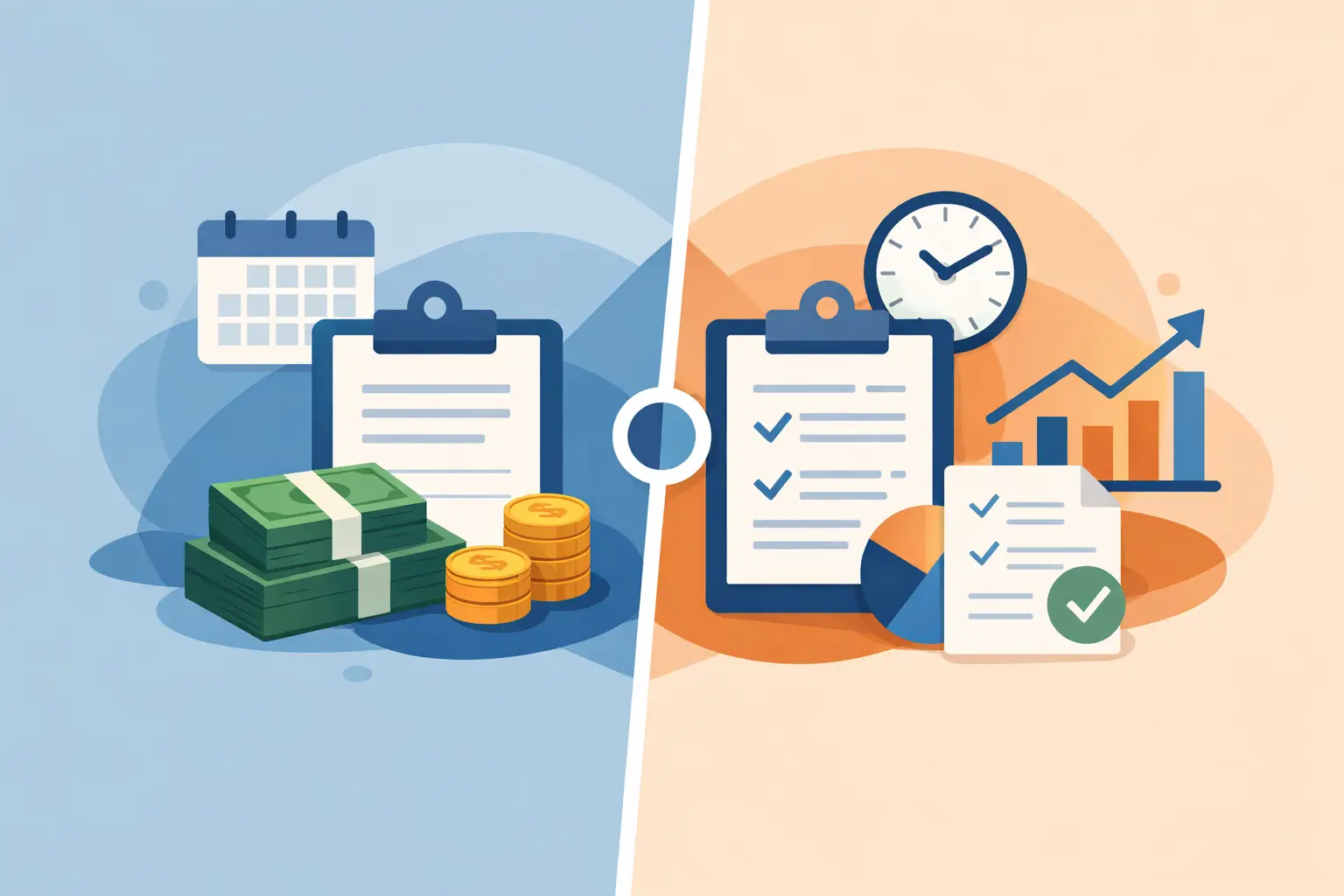
The central difference is timing. Cash accounting follows payment activity. Accrual accounting follows business activity.
Consider a Fresno retailer that purchases $12,000 of merchandise in November, sells most of it in December, and pays the supplier in January. Under a cash approach, the expense may not be recognized until January. Under an accrual approach, the cost associated with merchandise sold is reflected when those sales occur in December. The accrual records may give the owner a more accurate December profit figure.
Now consider a consultant who sends a $6,000 invoice in late December and receives payment in February. Cash accounting generally places the income in February. Accrual accounting generally recognizes it in December if the consultant completed the work then. Neither result is automatically better. The useful question is which method gives the business the information it needs and complies with applicable tax rules.
How Each Method Affects Taxes
Your accounting method can affect the year in which income and deductions are reported for federal and state tax purposes. It does not eliminate tax on legitimate income. Instead, it can change the timing of when certain income and expenses are recognized.
A cash-basis business generally reports income when it receives payment. This can be helpful for owners who want taxable income to track cash actually collected. However, a cash method business still needs organized records, especially when it accepts deposits, uses credit cards, receives payments through online platforms, or has outstanding customer invoices.
An accrual-basis business generally reports income when the right to receive it is established and reports expenses when liability is incurred, subject to detailed tax rules. This may create taxable income before the customer has paid, which makes receivables collection and cash planning especially important.
Federal tax rules allow many small businesses to use the cash method, but eligibility is not universal. Certain businesses, inventory-related activities, tax shelters, and other circumstances can be subject to special requirements. Tax rules and gross-receipts thresholds can also change. Before selecting a method for a new business or changing an existing one, review the current requirements with a tax professional.
Changing a tax accounting method is not always as simple as changing a setting in your bookkeeping software. In many cases, an IRS-approved method change process may be required, and adjustments may be needed to prevent income or deductions from being counted twice or missed entirely.
Which Method May Fit Your Business?
Cash accounting often fits owner-operated service businesses with limited inventory, relatively simple transactions, and a strong focus on near-term cash flow. A self-employed professional, local consultant, or small repair business may find it practical and easy to manage.
Accrual accounting is often more useful for businesses that carry inventory, extend meaningful credit to customers, manage long-term projects, work with multiple vendors, or need detailed reports for lenders, investors, or management decisions. It can also be valuable when sales and payments frequently occur in different months.
Growth can change the answer. A business that began with a few monthly invoices may eventually add employees, inventory, recurring contracts, financing, or multiple locations. As transactions become more complex, an accrual-based management report can help the owner see margins, unpaid invoices, and obligations that a bank balance alone cannot reveal.
Some businesses benefit from using different perspectives for different needs. For example, management may review accrual-based reports to understand operating performance while also monitoring weekly cash activity to ensure payroll, rent, taxes, and vendor payments can be covered. Your tax reporting method and your internal reporting needs should be coordinated carefully, but they do not have to create confusion when the bookkeeping is properly structured.
Questions to Ask Before You Decide
Start by looking at the way money moves through your business. Do customers pay immediately, or do you invoice them and wait 30, 60, or 90 days? Do you buy inventory or materials before a sale? Are deposits, retainers, subscriptions, or project milestones part of your normal work? The more your timing of sales, costs, and payments differs, the more useful accrual information may become.
Also consider who relies on your financial reports. If you are applying for financing, preparing to sell a business, bringing in a partner, or trying to measure profitability by job or department, reliable accrual reports may carry more decision-making value. If your operation is simple and your main priority is tracking available cash and preparing accurate tax returns, cash accounting may be appropriate.
The goal is not to choose the most complicated method. It is to build records that are accurate, compliant, and useful when you need to make a decision.
A dependable accounting system should give you more than a year-end tax number. It should help you understand what you have earned, what you owe, what customers owe you, and what your next business decision will require. A conversation with an experienced accountant can help you choose an approach that supports the business you have now while preparing you for the one you are building.