
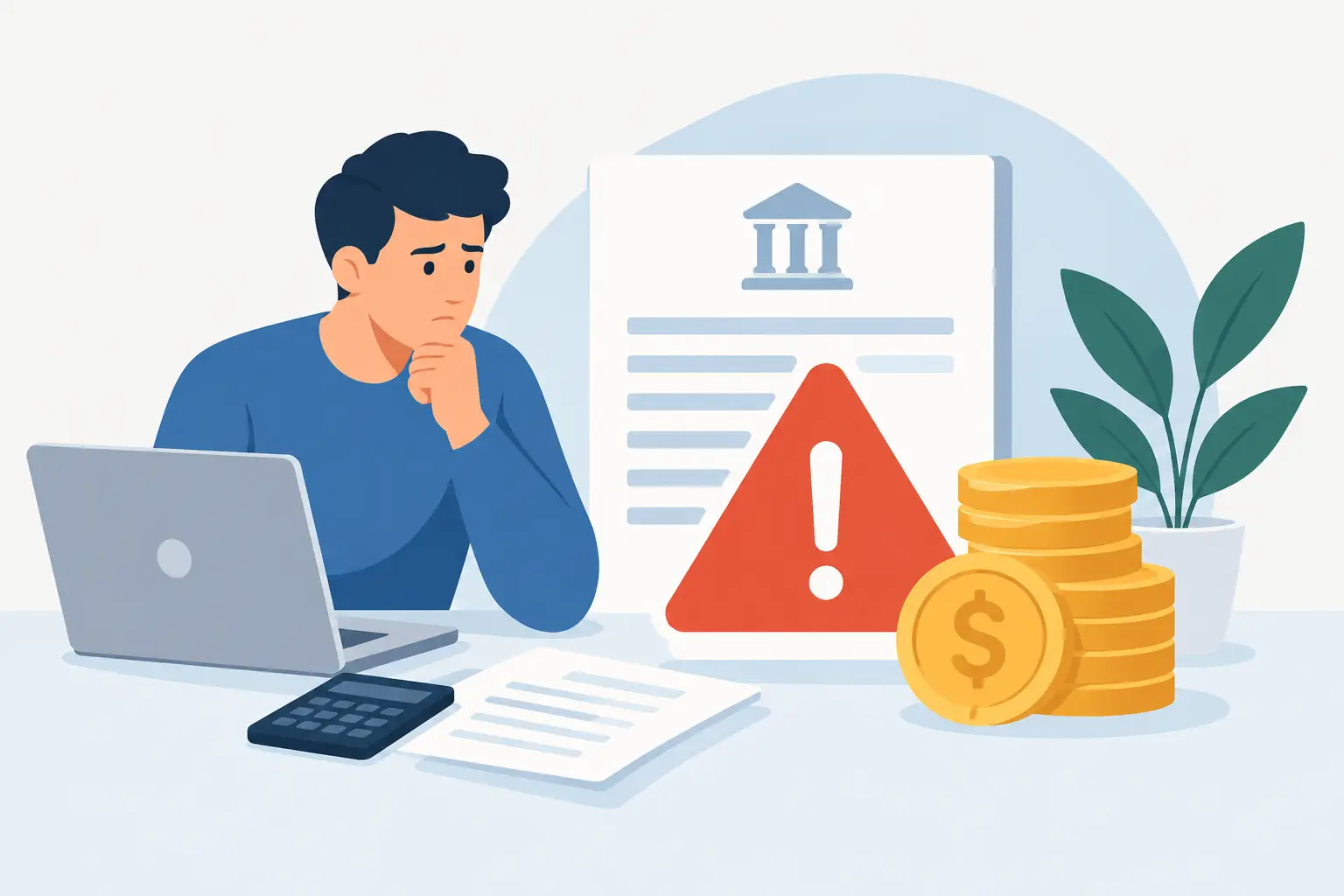
A tax notice can feel especially unsettling when it arrives after you thought a return was finished. For a Fresno family, it may mean an unexpected balance during an already expensive season. For a small-business owner, tax penalties can turn a manageable tax bill into a cash-flow problem if payroll filings, estimated payments, or bookkeeping have fallen behind.
The good news is that a penalty notice is not something to ignore, but it is also not always the final word. The right response depends on what the notice says, whether the amount is correct, why the issue occurred, and how quickly you take action.
What Are Tax Penalties?
Tax penalties are additional charges assessed when a taxpayer does not meet a filing, payment, deposit, or reporting requirement. They are separate from the tax itself. Interest may also continue to accrue on unpaid tax and, in many cases, on the penalties until the balance is paid.
The IRS and the California tax authorities have their own rules, notices, deadlines, and penalty calculations. A federal issue does not automatically mean there is a California issue, and the reverse is also true. Business owners may also have obligations involving payroll taxes, sales tax, or local filings that follow different schedules.
That distinction matters. A notice should be read carefully before any payment is made or response is sent. The tax year, type of tax, stated due date, and reason code can tell you whether you are dealing with a late return, a late payment, an underpayment, or a correction the agency made to your return.
Common Reasons Tax Penalties Are Assessed
Late filing is one of the most common causes. If you owe tax and file after the deadline without a valid extension, the failure-to-file penalty can be significant. An extension generally gives you more time to file paperwork, not more time to pay the tax due. Filing on time, even when you cannot pay the full amount, often limits the damage.
Late payment penalties apply when the tax due is not paid by the original deadline. Some taxpayers assume a payment arrangement eliminates penalties immediately. Usually, it does not. A payment plan can make a balance more manageable and may reduce certain penalties in some circumstances, but interest generally continues until the balance is paid.
Estimated tax underpayment is another frequent issue for self-employed individuals, contractors, investors, and business owners. Employees usually cover much of their tax liability through withholding. A business owner whose income changes during the year may need quarterly estimated payments instead. Waiting until tax season to pay a large balance can lead to an underpayment penalty, even if the return is filed on time.
For employers, missed or late payroll tax deposits deserve immediate attention. Payroll taxes include amounts withheld from employees as well as employer payroll obligations. These funds are not simply another business expense to postpone when cash is tight. Penalties for late deposits can escalate quickly, and repeated noncompliance may create more serious collection concerns.
Other triggers include inaccurate information returns, failure to report income, bounced payments, incorrect retirement account reporting, and substantial understatement of income tax. Sometimes the problem is a simple data-entry error. Other times, it comes from incomplete books, missing 1099 forms, or a return prepared using estimates that were never reconciled to actual records.
Why Ignoring a Notice Makes the Problem More Expensive
A tax notice has a response deadline for a reason. Ignoring it can mean losing time to dispute an error, request relief, or arrange payment before additional collection activity begins. Penalties and interest can continue to grow, and future notices may become more urgent.
This does not mean every notice is correct. Tax agencies process enormous volumes of returns, and mismatches happen. For example, a taxpayer may have reported income correctly while a payer issued a form with an error. A business may have made a payment that was applied to the wrong period. The notice still requires a response, but the appropriate response may be documentation rather than payment.
Do not assume a notice is a scam simply because it is unexpected, but do verify it. Review the agency name, tax year, notice number, contact information, and the return it references. Avoid providing personal or financial information through an unsolicited call, text, or email. Official notices typically explain the issue in writing and provide a way to verify the balance through an official account or tax professional.
How to Respond to Tax Penalties Step by Step
Start by comparing the notice with your filed return, payment confirmations, and records for the year in question. Confirm the taxpayer identification number, filing status, business entity, and tax period. A notice tied to the wrong year or entity can send you down the wrong path.
Next, identify whether you agree with the tax amount and the penalty. If the tax calculation is wrong, respond by the stated deadline with the requested supporting records. If the tax is correct but payment is the issue, pay as much as you reasonably can by the deadline. Partial payment may not stop all interest, but it can reduce the balance on which future charges are calculated.
If you cannot pay in full, consider whether an installment agreement is appropriate. A payment plan should fit the business or household budget realistically. Agreeing to an amount that cannot be sustained can create another missed-payment problem. For a business, it is wise to separate the old tax balance from current tax obligations so that a new quarter does not become overdue while you pay off a prior one.
Keep copies of notices, returns, proof of payment, correspondence, and records submitted in response. For small businesses, this is also a good moment to assess the bookkeeping process. Monthly reconciliations, payroll reports, sales records, and a current profit-and-loss statement make it much easier to spot a problem before a deadline passes.
Can Tax Penalties Be Removed?
Penalty relief may be available, but it is not automatic. Tax authorities may consider removing or reducing penalties when a taxpayer can show reasonable cause, has a qualifying history of compliance, or meets another specific relief provision. Interest is generally harder to remove because it is intended to compensate for the time the tax remained unpaid, though limited exceptions can apply.
Reasonable cause is fact-specific. A serious illness, natural disaster, death in the immediate family, unavoidable absence, or records destroyed by an unexpected event may support a request when the taxpayer acted responsibly under the circumstances. Forgetting a deadline or being too busy is usually not enough on its own.
A first-time penalty relief option may be available to some taxpayers with a clean recent compliance history. Eligibility depends on the type of tax, prior filing and payment record, and whether required returns have been filed. It is not a substitute for correcting the underlying balance.
The strongest request is clear and documented. Explain what happened, when it happened, what steps you took to comply, and why the circumstances were outside ordinary control. Avoid vague statements. If medical treatment, a disaster, or a third-party error is central to the request, retain records that support the timeline.
Prevention Starts With Better Tax Habits
Most penalty problems are preventable, although prevention looks different for every taxpayer. An employee may need to review withholding after a new job, marriage, side income, or major life change. A sole proprietor may need a dedicated savings account for tax payments and a quarterly estimate based on current profit rather than last year’s income.
For growing businesses, the key is treating bookkeeping as a management tool, not a year-end task. Accurate books show whether sales are rising, whether expenses are supported, and whether there is enough cash set aside for payroll and income taxes. They also give your tax advisor time to recommend adjustments before a deadline, rather than trying to repair a problem after one.
A practical routine includes reconciling accounts each month, reviewing payroll deposits on schedule, saving source documents, monitoring estimated tax deadlines, and opening tax mail promptly. These are small disciplines, but they protect both cash flow and peace of mind.
If a notice is confusing, the balance is growing, or several tax periods are involved, professional guidance can bring structure to the next steps. SBA Accounting & Tax Solutions helps individuals and small businesses understand what their records and notices are saying, organize a response, and build habits that reduce the chance of the same issue returning next year.
The most helpful next move is often the simplest one: open the notice, identify the deadline, and address the current tax period while you resolve the past one. Timely action gives you more options and keeps a tax concern from becoming a longer-term financial distraction.